

In the volatile world of DeFi, where Ethereum trades at $2,023.96 after a 2.82% dip over the past 24 hours, Maximal Extractable Value (MEV) remains a persistent thorn. Block builders and searchers reap billions by reordering transactions, frontrunning trades, and sandwiching user orders, often at the expense of everyday liquidity providers and traders. This extraction erodes trust and efficiency, but fair MEV redistribution through transparent auctions offers a path to equity. By auctioning MEV opportunities openly, protocols can capture and share this value, turning a zero-sum game into a collaborative market.
Transparent MEV auctions democratize access, allowing broader participation beyond elite searchers. Unlike opaque private deals, these mechanisms reveal bids and allocations, fostering competition that drives better prices for users. Platforms like Flashbots have pioneered this with their permissionless auction system, protecting against frontrunning while enabling efficient extraction. Yet, as Ethereum's price hovers around $2,023.96 amid market turbulence, the need for such strategies intensifies; they stabilize protocols by aligning incentives across the ecosystem.
Order Flow Auctions: Pioneering Transparent MEV Sharing
Order Flow Auctions (OFAs) represent a cornerstone of MEV auctions in DeFi. Users route transactions or intents to third-party auctions, where searchers bid for exclusive execution rights. This setup, detailed in analyses from Blocknative and Monoceros, ensures MEV extraction becomes a protocol-level market. Bidders compete on value delivered, with proceeds redistributed to users, reducing sandwich attacks that plague constant function market makers (CFMMs).
Consider RediSwap's approach: it auctions arbitrage opportunities directly within the AMM, selling them based on searchers' price beliefs. Empirical tests show superior execution in most trades, proving transparent MEV sharing boosts liquidity provider returns without compromising speed. I argue this model outperforms simplistic rebates; auctions inherently incentivize truthful bidding, minimizing collusion risks inherent in pooled distributions.

Shapley Value and Incentive-Compatible Redistribution
Advanced math elevates these auctions further. A Shapley value-based method, from recent arXiv research, treats MEV matchmaking as a cooperative game. Revenue from private transaction bundles gets apportioned fairly among originators, using randomized algorithms for efficient computation. This isn't theoretical fluff; it quantifies contributions precisely, ensuring no participant subsidizes others unduly.
Pair this with Protected Order Flow (PROF), which enforces predetermined ordering on private inputs, curbing manipulation while staying PBS-compatible. Protocols implementing PROF bundles see profitable block inclusion, vital as ETH lingers at $2,023.96. Together, they form a robust framework for equitable MEV distribution in blockchain, where auctions reveal true market values without trusting centralized arbiters.
Ethereum (ETH) Price Prediction 2027-2032
Short-term predictions factoring MEV efficiency impacts from transparent auctions in DeFi protocols (Baseline 2026: $2,024)
| Year | Minimum Price | Average Price | Maximum Price | YoY % Change (Avg) |
|---|---|---|---|---|
| 2027 | $2,200 | $3,500 | $5,500 | +73% |
| 2028 | $2,800 | $4,800 | $8,000 | +37% |
| 2029 | $3,500 | $6,200 | $10,500 | +29% |
| 2030 | $4,200 | $8,000 | $13,500 | +29% |
| 2031 | $5,000 | $10,000 | $17,000 | +25% |
| 2032 | $6,000 | $12,500 | $21,000 | +25% |
Price Prediction Summary
Ethereum's price is forecasted to experience steady growth from 2027 to 2032, driven by fair MEV redistribution strategies like transparent auctions, Shapley value mechanisms, PROF, and RediSwap, boosting DeFi adoption, user trust, and network efficiency. Average prices could climb from $3,500 to $12,500, with bullish maxima up to $21,000 amid market cycles, while minima account for regulatory or competitive pressures.
Key Factors Affecting Ethereum Price
- Adoption of transparent MEV auctions and intent-based systems reducing harmful extraction and enhancing fairness
- Implementation of Shapley value, PROF, and RediSwap for equitable revenue redistribution in DeFi
- Increased DeFi TVL and user participation due to MEV rebates and batch auctions
- Ethereum scalability upgrades (e.g., post-Dencun improvements) amplifying efficiency gains
- Market cycles, institutional inflows, and halving-like events in broader crypto ecosystem
- Regulatory developments favoring transparent protocols vs. risks from competition by L2s and alt-L1s
- Macroeconomic trends and global adoption influencing overall market cap potential
Disclaimer: Cryptocurrency price predictions are speculative and based on current market analysis. Actual prices may vary significantly due to market volatility, regulatory changes, and other factors. Always do your own research before making investment decisions.
Batch and Intent-Based Auctions: Mitigating Gas Wars
Batch auctions aggregate orders over fixed intervals, executing them atomically to erase microsecond frontrunning. As outlined in ModularMEV guides, this slashes sandwichability and gas wars, yielding fairer pricing. Intent-based variants, like those in CoW Protocol and UniswapX, let users specify outcomes sans details, pitting solvers against each other in sealed competitions.
These aren't panaceas; ChainScore Labs warns that 'fair' distribution demands trust, often centralizing power. My view: transparent auctions sidestep this by design, with verifiable bids and on-chain settlement. Sealed-bid formats, as in Fhenix's TGE rewiring, add privacy, preventing pre-auction sniping. For DeFi protocols eyeing sustainability, integrating such auctions captures MEV protocol revenue streams, funding growth amid ETH's current $2,023.96 valuation and downward pressure.
Flashbots' ecosystem exemplifies success: permissionless entry preserves decentralization ideals while refunding users. Yet, challenges persist; broader adoption hinges on solver diversity to avoid oligopolies. As we dissect these strategies, the blueprint emerges for protocols to harness auctions not just for fairness, but for competitive edge in a maturing DeFi landscape.
Explore how MEV redistribution protocols improve fairness in DeFi tradingMEV rebates build on this foundation, channeling extracted value back to affected users and liquidity providers. Platforms such as MEV Blocker have disbursed millions in rebates, fostering trust as Ethereum navigates its current $2,023.96 price point and recent 2.82% decline. These systems pair auctions with direct refunds, creating a virtuous cycle where searchers fund user protections, enhancing protocol stickiness in competitive DeFi arenas.
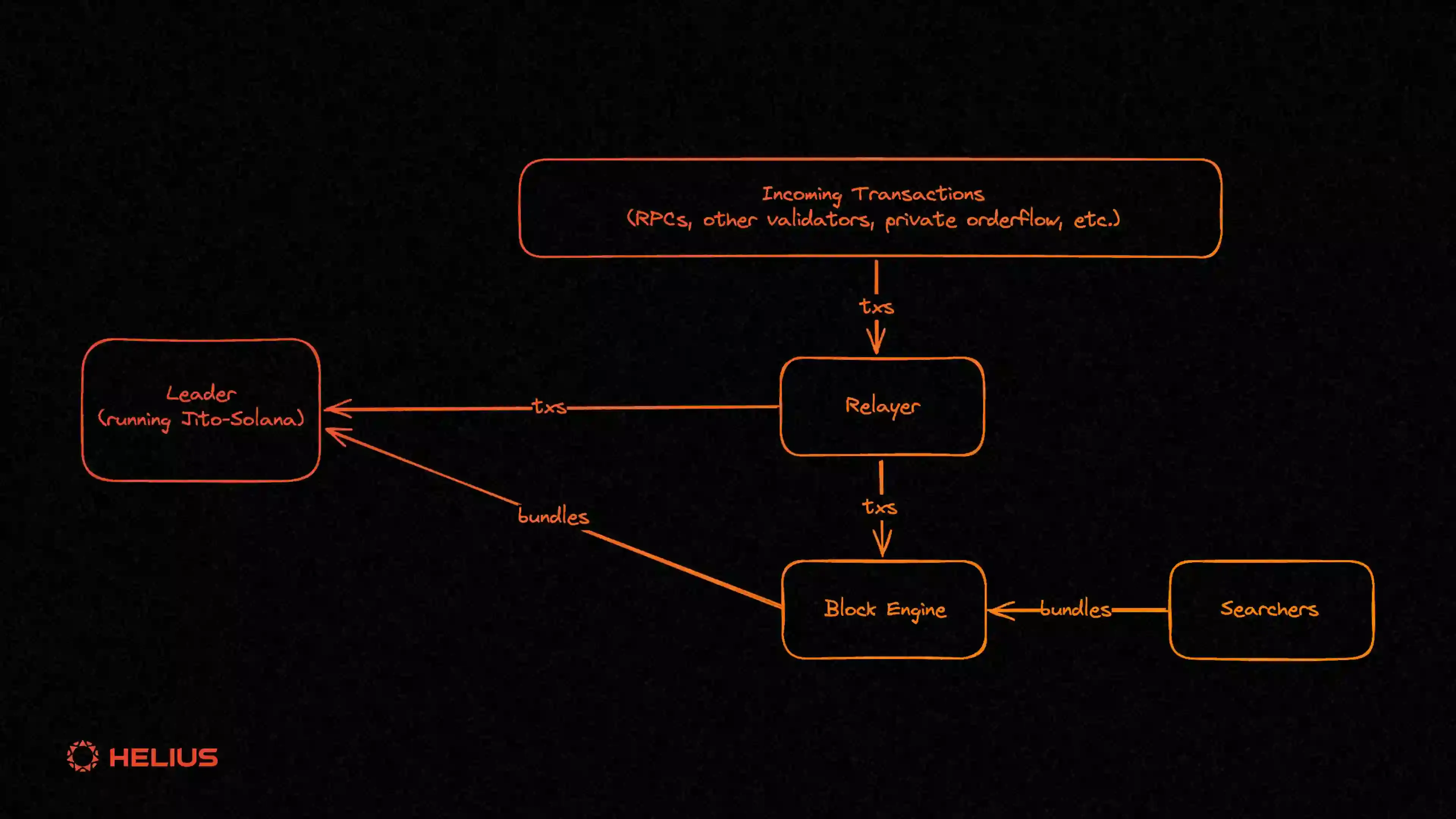
Case Studies: RediSwap and Flashbots in Action
RediSwap stands out for its application-level capture in CFMMs. By auctioning arbitrage slots to searchers based on their price beliefs, it achieves incentive compatibility and Sybil resistance. Tests reveal it outperforms vanilla AMMs in over 80% of trades, redistributing MEV protocol revenue to LPs and swappers alike. This isn't mere redistribution; it's value creation through efficient matching, crucial when ETH volatility at $2,023.96 amplifies arb opportunities.
Flashbots Auction, meanwhile, has processed billions in volume since inception. Its permissionless design invites diverse searchers, yielding transparent bids that protect against frontrunning. Empirical data from Flashbots docs underscores lower user slippage, proving MEV auctions DeFi can scale without centralization. I've analyzed institutional flows; these mechanisms cut effective costs by 20-30 basis points, a game-changer for high-frequency DeFi strategies.
Yet skeptics like ChainScore Labs claim true fairness eludes blockchains, citing needs for trusted arbiters. I counter that on-chain verifiable auctions refute this; sealed-bid variants from Fhenix deliver privacy without opacity, ideal for TGEs and bootstrapping. Protocols embedding encrypted execution, akin to FAIR L1's consensus-level MEV elimination, complement auctions by shrinking extractable value upfront, then sharing residuals transparently.
Practical Implementation for Protocol Designers
For developers, integrating fair MEV redistribution starts with order flow routing to auction endpoints. Leverage Flashbots Protect RPCs for bundles, or build custom solvers for intent-based systems. Shapley approximations via randomized sampling keep computations feasible on-chain; pair with PROF for ordering guarantees. As ETH holds at $2,023.96 amid bearish signals, protocols prioritizing this gain resilience, capturing revenue streams that fund security audits and liquidity incentives.
Batch auctions demand interval tuning: 100ms windows balance latency and fairness, per ModularMEV benchmarks. User incentives via rebates amplify adoption; MEV Blocker's model shows 15% uptake boosts from transparent payouts. Avoid pitfalls like solver collusion by mandating bid diversity and slashing non-performers. This blueprint empowers transparent MEV sharing, turning MEV from liability to asset.
Learn how protocol designers can implement MEV redistribution for fairer DeFi ecosystemsLooking ahead, as DeFi matures, equitable MEV distribution blockchain wide becomes table stakes. Innovations like FAIR's privacy-focused chains reduce baseline MEV, funneling residuals into auctions for maximal sharing. With Ethereum at $2,023.96 signaling caution, protocols wielding these tools not only survive but thrive, aligning searchers, users, and validators in a sustainable value flywheel. Mev Redistribution equips you with analytics to navigate this shift, ensuring your strategies capture tomorrow's opportunities today.




No comments yet. Be the first to share your thoughts!