

In the high-stakes arena of decentralized finance, Maximal Extractable Value, or MEV, stands as both a boon and a bane. Search bots and sophisticated traders reorder transactions to siphon profits from arbitrage, liquidations, and sandwiches, often leaving everyday users and liquidity providers in the dust. This MEV paradox fuels market efficiency yet breeds profound inequities, prompting the rise of fair-MEV strategies that prioritize equitable MEV sharing through fairness-aware incentive redistribution. As DeFi matures, these mechanisms are reshaping incentives, ensuring value flows back to the community rather than concentrating in the hands of a few.
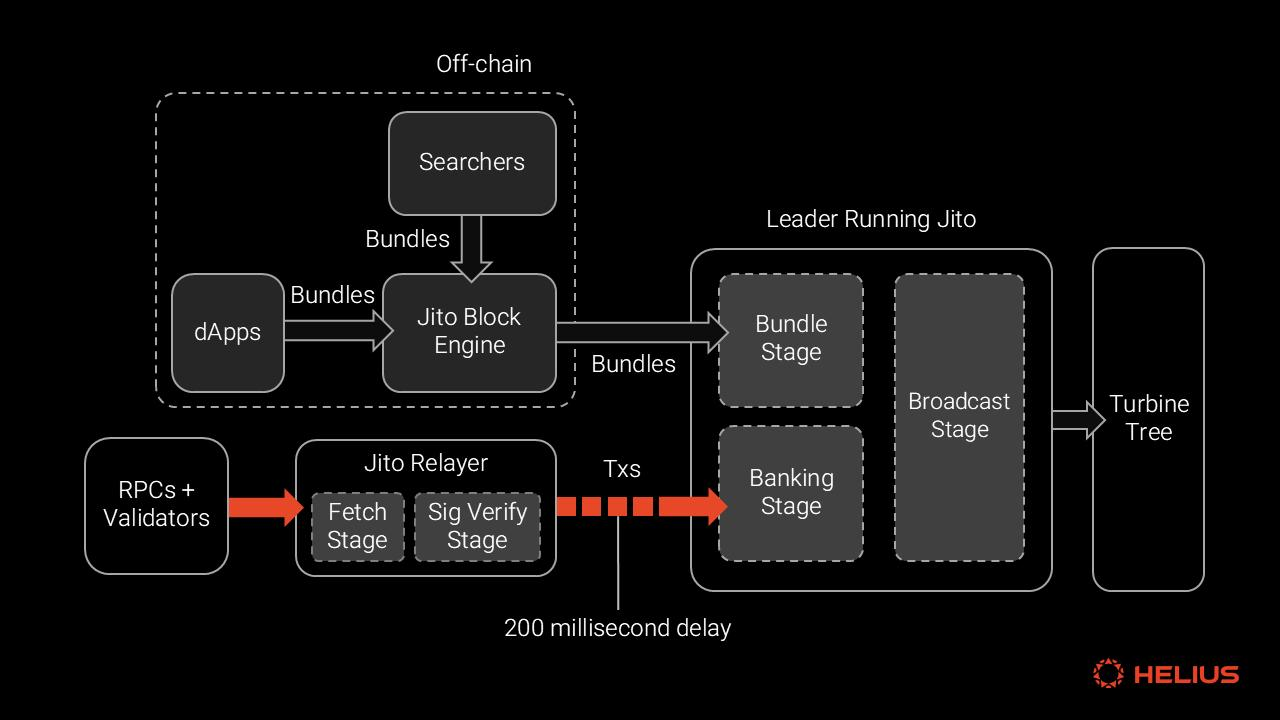
MEV emerges the moment transactions hit the public mempool, ripe for manipulation by those with superior speed or access. At its essence, it's the profit from reordering, inserting, or censoring blocks, as Jake Rubin articulates in his Medium exploration of the MEV paradox. Proponents argue it arbitrages price discrepancies, tightening spreads across DEXes. Yet, this efficiency masks exploitation: sandwich attacks inflate slippage for retail traders, while front-running erodes trust. Galaxy's analysis nails it, MEV at its worst distorts DeFi's permissionless promise, turning transparent ledgers into playgrounds for the privileged.
Unpacking the Fairness Deficit in Ethereum's PoS Era
Ethereum's shift to Proof-of-Stake amplified these tensions. Validators now propose blocks, wielding power once held by miners, but fairness simulations reveal stark disparities. A CEUR-WS study using Python frameworks shows how proposer influence skews value capture, with high-stake nodes dominating. arXiv's SoK on fair message ordering underscores the stakes for DeFi: without intervention, nodes maximize personal gain, undermining protocols like Uniswap or Aave. This isn't mere theory; Flashbots bundles demystify real-world MEV, where opportunistic traders feast on transparency's double edge.
Enter MEV fairness protocols. These aren't bandaids; they're architectural pivots. By embedding redistribution at the protocol layer, they align extractors, users, and providers. I view this as DeFi's next evolution, transforming zero-sum games into cooperative abundance.
Comparison of Key Fair-MEV Mechanisms
| Mechanism | Redistribution Model | Key Metric | Notable Impact |
|---|---|---|---|
| FairFlow (KyberSwap) | 70% of MEV arbitrage profits to LPs (30% to ecosystem) | 21% APR (ETH-cbBTC pairs) | Outperforms standard pools (21% vs 16% on Base); launched Aug 2025 |
| RediSwap | MEV opportunities sold via auction to arbitrageurs; redistributed to users & LPs | 89% better execution than UniswapX | LP losses reduced to <0.5% LVR; introduced 2025 |
| MEV Blocker (CoW, Gnosis, Beaver) | Captured MEV as rebates to traders | 156 ETH rebates (Feb 2025) | Protected >$60 billion DEX volume from sandwich/front-running |
Pioneering Protocols: FairFlow and RediSwap Lead the Charge
KyberSwap's FairFlow, launched August 2025, exemplifies MEV redistribution done right. It funnels 70% of arbitrage profits directly to liquidity providers, no staking required. Dual-token weekly rewards have propelled ETH-cbBTC pools to 21% annualized yields, outpacing Base network benchmarks by five points in under eight days. This isn't charity; it's strategic capture via their aggregator, with 30% fueling ecosystem growth. For LPs weary of impermanent loss, FairFlow flips the script, turning MEV from predator to patron. Developers eyeing implementation should explore how protocol designers can implement MEV redistribution.
RediSwap, another 2025 standout, operates at the AMM core. It auctions MEV opportunities to arbitrageurs based on price beliefs, slashing LP losses below 0.5% of traditional LVR metrics. Empirical data boasts 89% superior execution over UniswapX, proving application-level intervention trumps reliance on relays. These protocols herald fairness-aware MEV, where auctions and shares democratize value once hoarded by searchers.
MEV Blocker and Beyond: Safeguarding Users in Real Time
MEV Blocker, a trinity effort from CoW Protocol, Gnosis, and Beaver Build, shifts focus to user protection. This RPC endpoint thwarts sandwiches and front-runs, redistributing captured MEV as rebates, 156 ETH disbursed in February 2025 alone, atop $60 billion in secured volume. It's a beacon for traders, proving rebates can transform incentives without overhauling consensus. ZENMEV complements this with transparent reclamation, while MEV-Smoothing evens validator shares, curbing proposer collusion. FAIR Blockchain's encrypted consensus via BITE even preempts MEV at the source. Together, they form a robust arsenal for MEV incentive redistribution.
Yet, challenges persist. Cross-chain MEV, as Stanford notes, amplifies efficiencies but risks fragmentation. Dynamic frameworks from IFAAMAS offer hope, modeling extractor-user splits empirically. As portfolio managers, we must weigh these: fair-MEV isn't optional; it's the path to sustainable DeFi scale. Learn more on how MEV redistribution protocols improve fairness in DeFi trading.
Implementing these fair-MEV strategies demands precision at the protocol level. Developers must integrate auction mechanisms like RediSwap's or rebate systems akin to MEV Blocker directly into AMMs and aggregators. Threshold encryption, as in FAIR Blockchain, requires consensus-layer upgrades, while smoothing protocols necessitate validator incentives aligned with long-term equity. The International Financial Cryptography Association's theoretical framing positions MEV as economic attacks, underscoring why proactive redistribution fortifies blockchains against adversaries.
Quantifying Impact: Metrics That Matter
To gauge efficacy, look beyond raw rebates. Key indicators include LP return uplift, user slippage reduction, and validator profit variance. FairFlow's 21% APR on ETH-cbBTC versus 16% benchmarks quantifies LP gains, while RediSwap's sub-0.5% LVR losses highlight protection. MEV Blocker's $60 billion secured volume and 156 ETH rebates demonstrate scale. Empirical studies, like IFAAMAS's dynamic MEV-sharing models, reveal optimal extractor-user splits, often 40-60% favoring users under fair conditions. Galaxy's Pt. 1 insights affirm that while MEV boosts efficiency, unchecked extraction erodes participation; fairness protocols reverse this by sustaining liquidity depths.
Metrics Comparison Across Fair-MEV Protocols
| Protocol | Key Metrics |
|---|---|
| FairFlow | LP APR: 21%, Arb capture: 70% |
| RediSwap | Exec improvement: 89%, LVR loss: <0.5% |
| MEV Blocker | Rebates: 156 ETH, Volume: $60B |
| MEV-Smoothing | Profit variance: reduced 80% |
Policy lenses add depth. The International Center for Law and Economics' Ethereum MEV analysis urges regulators to prioritize transparency over bans, advocating redistribution as a market-native fix. Cross-chain extensions, per Stanford Blockchain Review, demand atomic bridges with baked-in fairness to capture interchain arbitrage without silos.
Future Horizons: Scaling Equitable MEV Markets
Looking ahead, MEV redistribution evolves with layer-2 proliferation and restaking. Protocols blending ZENMEV's transparency with MEV-Smoothing's equity could standardize shares across chains. For portfolio managers, this means diversified exposure: allocate to FairFlow pools for yield, MEV Blocker endpoints for trades, and FAIR chains for low-risk DeFi. The CEUR-WS fairness simulations predict that PoS enhancements like these could halve value disparities, fostering broader adoption.
At Mev Redistribution, we empower this shift with analytics tracking rebate flows and auction efficiencies. Traders gain dashboards for rebate-eligible bundles; developers access SDKs for seamless integration. This isn't altruism; it's disciplined strategy yielding resilient portfolios. As DeFi scales, those embracing fairness-aware MEV will capture sustainable alpha, while laggards face eroding edges. Stake your position in equitable flows today, where value circles back to builders and users alike. Dive deeper into how MEV redistribution enhances fairness in DeFi protocols.





No comments yet. Be the first to share your thoughts!