
The rise of agentic AI in MEV
The architecture of Maximal Extractable Value is undergoing a fundamental shift. We are moving away from static, rule-based bots toward autonomous AI agents capable of dynamic decision-making. This transition marks a departure from simple arbitrage execution to complex, multi-step strategic planning within the mempool.
Agentic AI systems do not merely react to on-chain events; they predict liquidity flows and adjust strategies in real-time. This capability allows for more sophisticated extraction methods that were previously impossible with hardcoded logic. The result is a more competitive and volatile environment for validators and searchers alike.
Data from 2025 and 2026 indicates rapid adoption of these agentic models across the MEV landscape. Enterprises and sophisticated actors are leveraging these tools to capture value in ways that static algorithms cannot match. The market size for agentic AI is expanding, driven by the tangible ROI these autonomous systems provide in high-frequency trading environments.
To understand the volatility driving these opportunities, it is essential to look at the underlying asset movements. Ethereum’s price action directly influences the volume and value of MEV opportunities available to these AI agents.
The integration of AI into MEV is not just about speed; it is about intelligence. These agents can analyze vast amounts of data to identify subtle patterns and execute trades with precision. This shift is redefining the competitive landscape for MEV extraction, making it more accessible to those who can effectively deploy these advanced technologies.
Validator yield dynamics in 2026
MEV rewards have shifted from a speculative bonus to a structural pillar of Ethereum staking economics. In 2026, the baseline yield from consensus layer rewards sits at approximately 2.78% APR. For validators running MEV-Boost, block construction auctions add a critical 0.5–1% APR to that base. This supplemental income is no longer optional; it is the primary differentiator between marginal and competitive staking returns.
The integration of MEV-Boost has effectively decoupled validator income from pure consensus participation. Validators who rely solely on standard block production miss out on the front-running, arbitrage, and liquidation opportunities that professional block builders capture and redistribute. Without MEV-Boost, a validator’s total yield remains static regardless of network activity levels. With it, yields scale with transaction volume and market volatility.
This dynamic creates a clear bifurcation in validator performance. The following comparison highlights the yield gap between standard staking and MEV-optimized configurations.
| Configuration | Base APR | MEV APR | Total Yield |
|---|---|---|---|
| Standard Validator | 2.78% | 0% | 2.78% |
| MEV-Boost Validator | 2.78% | 0.5–1% | 3.28–3.78% |
Source: KuCoin Blog, Yield Trends, Validator Queue Dynamics, and MEV Impact Explained (2026).
The 0.5–1% MEV premium represents a significant compound advantage over time. For large-scale validators managing substantial staked ETH, this difference translates to meaningful daily revenue. Consequently, infrastructure capable of reliably capturing MEV has become a prerequisite for profitability, not just an optional upgrade.
Profitability shifts for searchers
The era of high-margin, low-effort MEV extraction is closing. As AI-driven searchers deploy agentic models capable of real-time block construction and complex multi-transaction simulations, the competitive landscape has shifted from hardware arbitrage to algorithmic superiority. Traditional bots, reliant on static rules and simple arbitrage logic, are finding their profit margins compressed by the speed and adaptability of AI agents.
Data from 2025–2026 indicates that the agentic AI market is experiencing rapid adoption precisely because it solves the latency and complexity bottlenecks that plague legacy systems. AI searchers can now evaluate thousands of potential transaction paths in milliseconds, identifying and executing profitable opportunities before traditional bots even detect the market movement. This dynamic is not just an incremental improvement; it is a structural change in how value is captured on-chain.
For non-AI searchers, the return on investment (ROI) is declining. The cost of maintaining high-performance infrastructure no longer guarantees a share of the block space. Instead, capital is flowing toward entities that can integrate machine learning models to predict validator behavior and optimize gas strategies dynamically. The margin for error has vanished, and the margin for profit is now exclusively reserved for those with adaptive, intelligent systems.
This shift is visible in the broader market data. The efficiency gains provided by AI are driving down the average profit per transaction, forcing participants to rely on volume and sophistication rather than simple price discrepancies. As the market matures, the distinction between a "searcher" and an "AI agent" will become less relevant; the only distinction that matters will be who can process information faster and more accurately.
Key MEV 2026 Trends to Watch
The MEV landscape in 2026 is defined by a structural shift from reactive bot racing to proactive, AI-driven searchers. This transition is not merely about speed; it is about predictive accuracy and capital efficiency. Validators are no longer passive recipients of block space but active participants in a complex yield ecosystem where MEV rewards now constitute a significant portion of total staking income.
AI Searchers and Agentic Models
Agentic AI has moved beyond experimental phases into production-grade MEV extraction. Unlike traditional bots that rely on fixed rules, AI searchers analyze on-chain data patterns to predict transaction flows before they are broadcast to the mempool. This allows for more sophisticated front-running and sandwich attack mitigation strategies, fundamentally altering the competitive dynamic. The adoption of these models is driving a rapid increase in the efficiency of MEV capture, as seen in the broader agentic AI market growth trends for 2025–2026.
Validator Yield Dynamics
For validators, MEV is no longer optional. Ethereum staking yields in 2026 sit at roughly 2.78% base APR, but MEV rewards add another 0.5–1% for those running MEV-Boost. This supplemental income is critical for maintaining validator profitability as network fees fluctuate. The queue dynamics for block production are now heavily influenced by a validator's ability to aggregate and route MEV effectively, making technical infrastructure a primary determinant of yield.
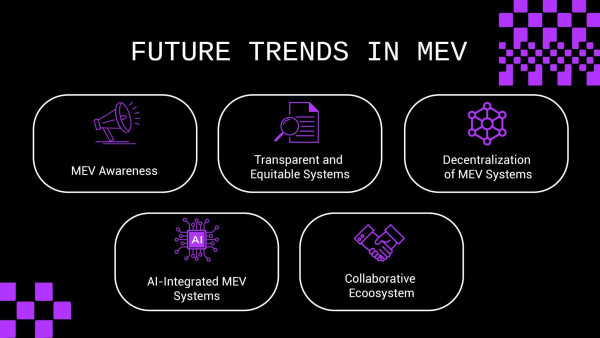
Regulatory and Technical Shifts
Regulatory scrutiny is intensifying around the opacity of MEV extraction. Authorities are beginning to classify certain forms of MEV as market manipulation, forcing searchers to adopt more transparent routing mechanisms. Technically, this is driving the adoption of private transaction pools and encrypted mempools to shield legitimate arbitrage from both regulatory detection and malicious competitors. The convergence of these regulatory pressures and technical innovations is creating a more fragmented, yet potentially more secure, MEV landscape.
| Strategy | Cost | Speed | Success Rate |
|---|---|---|---|
| Traditional Bots | Low | High | Declining |
| AI-Driven Searchers | High | Medium-High | Increasing |
Frequently asked questions about MEV
The intersection of artificial intelligence and validator economics is reshaping how MEV is captured and distributed. Below are the most common questions regarding the 2026 landscape for AI searchers and validator yields.
These dynamics highlight the shift from manual bot operations to automated, AI-centric strategies. As the technology matures, the focus will likely move toward sustainable yield generation rather than short-term extraction.
No comments yet. Be the first to share your thoughts!