
The New Block Space Battle
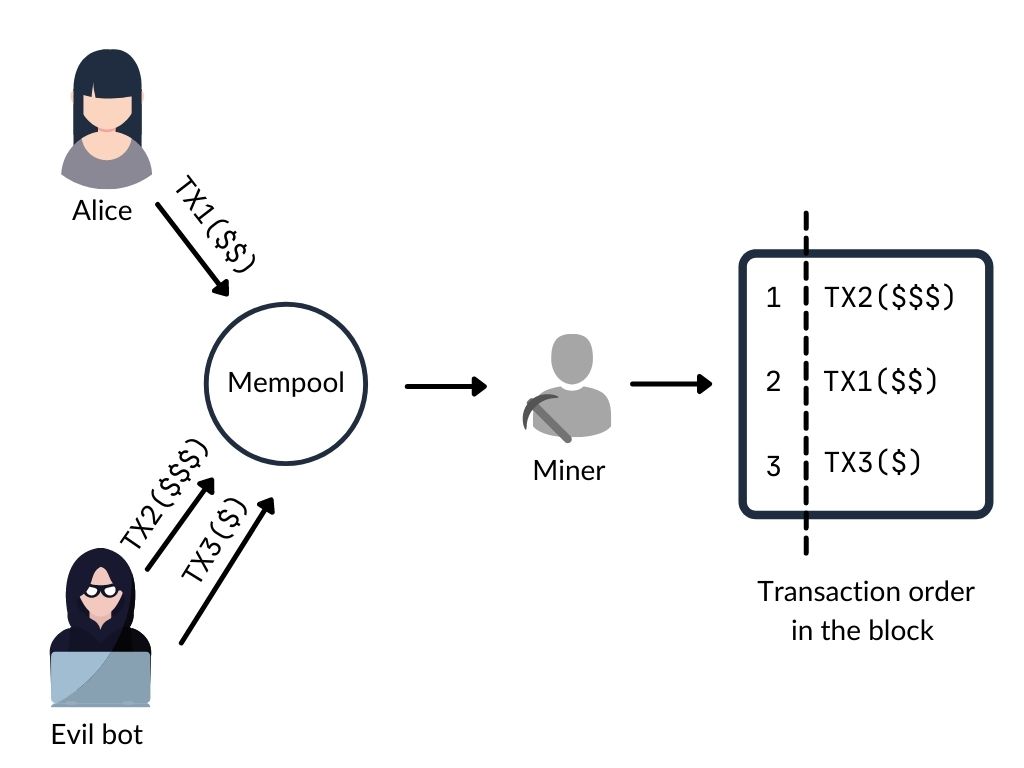
The landscape of Ethereum block production has shifted dramatically. In 2026, the race for Maximal Extractable Value (MEV) is no longer dominated by simple script-based bots but by sophisticated AI-driven searchers. These algorithms analyze mempool data in milliseconds, identifying opportunities for sandwich attacks, arbitrage, and liquidations with a speed and precision that human operators cannot match. This shift has turned block space into a high-stakes battlefield where efficiency often clashes with censorship resistance.
AI searchers excel at predicting market movements and executing complex multi-step transactions before other participants can react. For example, an AI model might detect a large pending buy order on a decentralized exchange, front-run it with a smaller purchase, and then sell immediately after the price spikes, profiting from the artificial inflation. While some forms of MEV, like arbitrage, help keep prices aligned across exchanges, predatory tactics like sandwich attacks extract value directly from users, eroding trust in the network.
This tension is central to the current debate surrounding Ethereum's infrastructure. As AI tools become more accessible, the barrier to entry for sophisticated MEV extraction lowers, increasing the frequency and complexity of these attacks. The challenge for the ecosystem is to balance the economic incentives that drive block production with the need to protect users from exploitation. Initiatives like encrypted mempools and decentralized sequencing are being explored to mitigate these risks, but the arms race between searchers and defenders continues to intensify.
The implications extend beyond individual losses. When users perceive the network as rigged, adoption slows, and the value proposition of decentralized finance weakens. The fight for Ethereum block space is not just about who gets the most profit; it is about defining the integrity of the platform itself. As AI continues to evolve, the mechanisms for fair and transparent block production must adapt to ensure that Ethereum remains a reliable foundation for global finance.
AI Searchers Outpacing Human Traders
Machine learning models have fundamentally altered the hierarchy of Ethereum block space. What was once a battlefield of manual code and heuristic scripts is now dominated by reinforcement learning agents that optimize transaction ordering in milliseconds. These AI searchers do not just react to mempool data; they predict it, allowing them to front-run human traders with a precision that manual strategies cannot match.
The most visible impact of this shift is the evolution of sandwich attacks. Traditional sandwiching involved placing a buy order before a victim's large trade and a sell order immediately after. AI models now analyze the probability of a trade succeeding and adjust their placement dynamically, often extracting value even from smaller, less obvious transactions. This automation raises the barrier to entry significantly, as individual searchers without access to proprietary neural networks and low-latency infrastructure are effectively priced out of the most profitable segments of the market.

The complexity of these AI-driven strategies extends beyond simple front-running. Arbitrage bots now use predictive models to identify cross-chain opportunities before they appear on public ledgers, effectively stealing liquidity from decentralized exchanges. As noted by Ethereum.org, MEV refers to the maximum value extractable by reordering transactions, but the scale and speed at which AI operates have transformed this from an occasional exploit into a structural feature of the network. The result is a market where human intuition is consistently outpaced by algorithmic efficiency.
Relay Censorship and OFAC Compliance
The decentralization of Ethereum faces a structural threat from MEV-Boost relays that enforce regulatory compliance, specifically regarding Office of Foreign Assets Control (OFAC) sanctions. While MEV extraction mechanisms like sandwich attacks and arbitrage are often criticized for harming retail users, they generally preserve the open nature of the network. In contrast, censorship relays actively exclude transactions based on the sender's wallet address, creating a two-tier system where certain users cannot transact.
This controversy centers on the growing influence of compliant relays. According to data from MEV Watch, censorious relays have processed nearly 25% of all Ethereum blocks in recent periods. This means that a significant portion of block space is reserved for transactions that pass regulatory filters, effectively allowing private entities to act as gatekeepers for the network's liquidity.
"Some MEV-Boost relays are regulated under OFAC and will censor certain transactions. Use this tool to observe the effect it's having on Ethereum blocks." — MEV Watch
The community response has been one of rapid adaptation. In response to this centralization pressure, developers have open-sourced alternative relay implementations that prioritize transaction inclusion over compliance checks. This shift aims to restore the permissionless nature of the network, ensuring that validators can include any valid transaction regardless of the sender's identity.
As AI-driven front-running becomes more sophisticated, the distinction between malicious MEV extraction and regulatory censorship becomes critical. While AI bots exploit market inefficiencies, censorship relays exploit regulatory ambiguity. The ongoing battle for block space is no longer just about profit; it is about who controls the rules of participation on Ethereum.
Protocol Responses to MEV Extraction
The rise of AI-driven front-running has intensified the pressure on Ethereum’s base layer, prompting developers to engineer structural changes that separate transaction ordering from block production. The goal is not to eliminate MEV entirely, but to neutralize its most predatory forms—such as sandwich attacks and arbitrage bots—while preserving the network’s censorship resistance. These solutions aim to restore fairness to block space, ensuring that user intent, not algorithmic speed, dictates transaction inclusion.
SUAVE and Decentralized Order Flow
Flashbots’ SUAVE (Sustainable Universal Auction Verification Environment) represents a significant shift in how order flow is handled. Rather than relying on the public mempool, where AI bots can instantly detect and front-run large trades, SUAVE creates a decentralized marketplace for order flow. Searchers submit bids to include transactions, but the actual execution happens in a secure, isolated environment. This prevents validators from seeing the contents of transactions before they are committed, effectively blinding AI front-runners to their targets. By decoupling the auction process from block building, SUAVE aims to distribute MEV rewards more evenly and reduce the advantage held by centralized block builders.
Encrypted Mempools and Privacy
Complementing structural changes like SUAVE are privacy-focused protocols such as Shutter Network, which utilize encrypted mempools. In this model, transactions are submitted in an encrypted form, invisible to bots scanning for profitable opportunities. Validators can only see the transaction data once it is included in a block, at which point it is decrypted. This removes the informational advantage that AI front-runners rely on for sandwich attacks. While this adds complexity to the user experience, it offers a robust defense against the most common forms of MEV extraction, ensuring that traders are not penalized for their own market activity.
PBS Reforms and Censorship Resistance
The Proposer-Builder Separation (PBS) model, already being implemented in Ethereum’s consensus layer, is another critical response. By splitting the role of block proposing and block building, PBS reduces the centralization of power among a few large validators. However, recent debates, including those highlighted by Flashbots and Ethereum Foundation developers, emphasize that PBS alone does not solve censorship issues. If builders are too powerful, they can still censor transactions. Therefore, ongoing reforms focus on ensuring that builders cannot selectively exclude transactions based on political or economic pressure, a concern that has grown as AI tools make censorship more efficient and scalable.
MEV is currently the bottleneck for a censorship-resistant Ethereum. We must design systems where value extraction does not come at the cost of user trust or network neutrality.— Flashbots Research
Community Sentiment on MEV Watch
The Ethereum community views MEV Watch not just as a monitoring tool, but as a necessary transparency layer in an increasingly opaque landscape. As AI-driven searchers become more sophisticated, the concern shifts from simple arbitrage to systemic centralization. Users are increasingly vocal about the need for open-source relays and visible block construction to prevent a small group of actors from dominating block space.
"It's improving. More blocks are non OFAC compliant since the MEV relays were open sourced." — r/ethereum community member
This sentiment is echoed across technical forums, where discussions focus on the balance between censorship resistance and regulatory compliance. The rise of AI front-running has intensified debates over whether current monitoring mechanisms are sufficient to protect retail users from sophisticated sandwich attacks.
Reddit discussions highlight a growing awareness of how MEV extraction impacts everyday DeFi interactions. While some see MEV as a natural market efficiency mechanism, others view unmonitored extraction as a threat to network integrity. The consensus leans toward supporting tools that make these flows visible, ensuring that the benefits of block production are distributed more equitably.
No comments yet. Be the first to share your thoughts!