

Miner Extractable Value (MEV) has rapidly evolved from an obscure technical nuance into a central force shaping the economics and fairness of decentralized finance. As MEV extraction strategies become increasingly sophisticated, the blockchain community faces a critical question: who should benefit from these profits, and how can protocols ensure value is distributed equitably? Two leading solutions, Wallchain and MEV Blocker, have emerged with distinct philosophies on MEV redistribution, each offering unique incentives for users, searchers, and protocols.
Understanding the MEV Redistribution Challenge
At its core, MEV refers to the additional value that can be captured by reordering, inserting, or excluding transactions within a block after they are publicly broadcast. In the context of DeFi, this often takes the form of arbitrage, liquidations, or sandwich attacks, where transaction ordering can dramatically impact user outcomes. Historically, much of this value accrued to validators or specialized searchers with advanced infrastructure. The result: regular users and even protocols themselves were often sidelined in the value flow.
This dynamic led to increasing calls for fairer MEV sharing strategies that would realign incentives across all stakeholders. The latest generation of MEV redistribution protocols seeks to address these challenges by returning extracted value directly to end users and protocol participants.
Wallchain’s Meta-Intent Flow Auction: Bundling User Value
Wallchain introduces an innovative approach through its Meta-Intent Flow Auction mechanism. By integrating directly with DeFi platforms and wallets, such as PancakeSwap and ZeroSwapDEX on BNB Chain, Wallchain enables user swaps to be bundled with searcher strategies into a single transaction. This design not only captures arbitrage opportunities efficiently but also ensures that a significant portion of generated MEV is returned to the user who initiated the transaction.
The key innovation lies in aligning the interests of dApps, users, and searchers within one atomic execution flow. Instead of competing against searchers for order flow or relying on private relays alone, Wallchain creates a shared incentive structure where:
- Users receive direct rebates from captured MEV
- dApps benefit from increased retention and improved UX
- Searchers compete transparently for bundled flows via auction
This model is particularly effective in reducing friction between parties while maximizing collective gains, a marked shift from traditional validator-centric extraction models. For more details on how Wallchain drives equitable value flows across stakeholders, see this deep dive into fair value flows.
MEV Blocker: User-Centric Rebates Through Private Order Flow
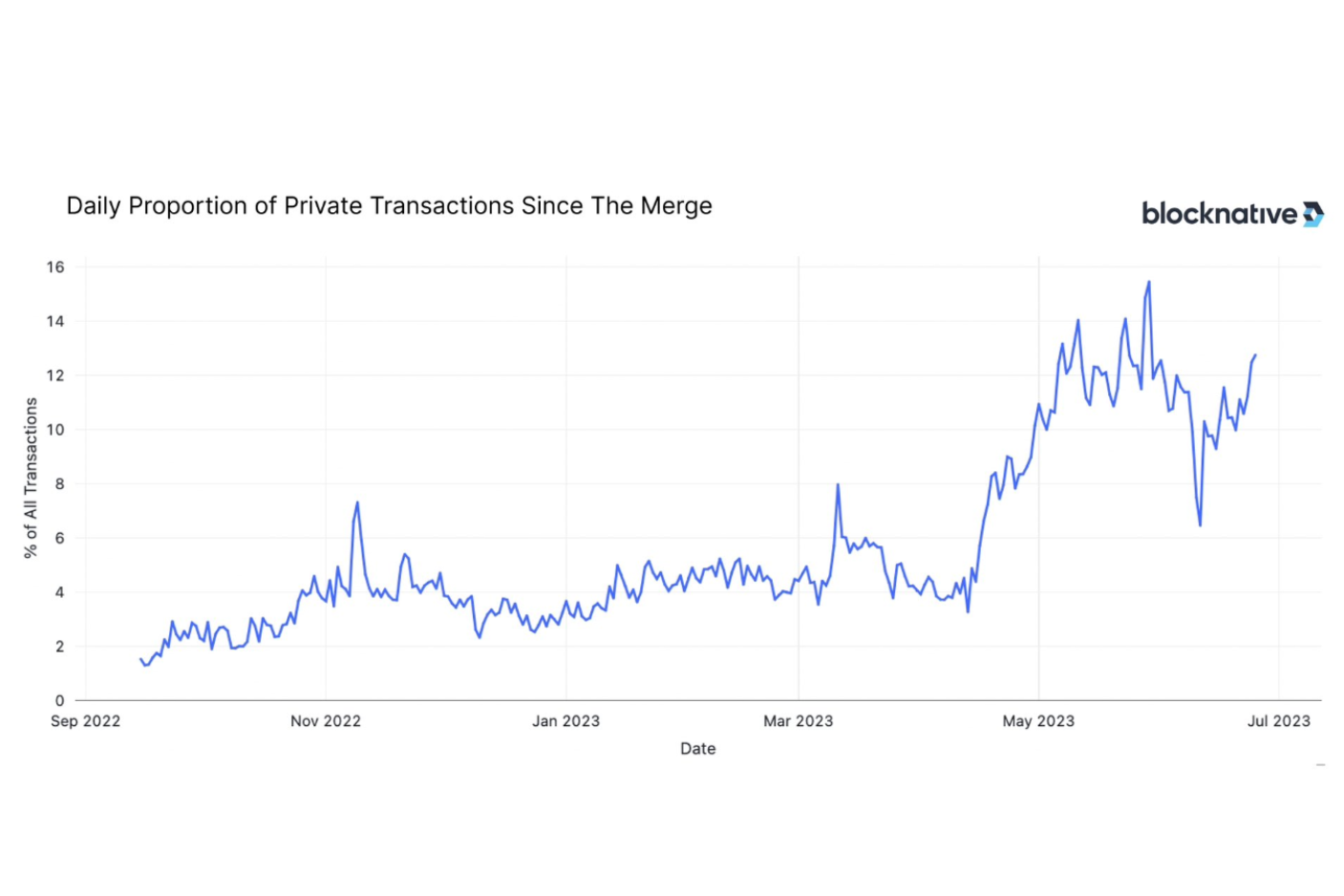
MEV Blocker, meanwhile, adopts a different philosophy centered around privacy and user protection. Developed by a consortium of over 30 Ethereum teams, including Gnosis and CoW Protocol, MEV Blocker routes transactions through a private RPC network designed to shield users from front-running and sandwich attacks. Here’s how it works:
- User transactions are sent via private channels rather than public mempools.
- The right to backrun these transactions is auctioned among builders/searchers.
- Ninety percent (90%) of builder rewards are rebated directly back to users as compensation for their order flow.
This design has proven effective in practice; in 2024 alone, MEV Blocker distributed over 4,079 ETH in rebates, demonstrating tangible benefits for everyday DeFi participants. The protocol prioritizes transparency by making rebate data public and emphasizing user empowerment over opaque extraction mechanisms.
Ecosystem Incentives: Aligning Stakeholders for Sustainable Growth
The contrasting approaches taken by Wallchain and MEV Blocker reflect broader debates within DeFi about optimal incentive alignment:
- User Retention: Platforms offering visible rewards see higher stickiness as users recognize direct benefits for participation.
- Ecosystem Collaboration: When profits are shared among users, liquidity providers, developers, and not just searchers or validators, the result is reduced friction and greater protocol loyalty.
- Sustainable MEV Models: Both solutions move away from zero-sum extraction toward positive-sum collaboration by ensuring transparent profit-sharing mechanisms.
This transition toward more inclusive models has profound implications for protocol design game theory as well as overall market efficiency. Protocols must now weigh not only technical sophistication but also community trust when choosing their approach to MEV sharing strategies.
For developers and protocol designers, these evolving MEV distribution models demand careful consideration of trade-offs. Wallchain’s meta-intent auctions offer a high degree of integration and flexibility for dApps seeking to maximize user engagement and retain order flow within their own ecosystem. This approach can be particularly attractive for platforms prioritizing composability, as it enables direct partnership with searchers while maintaining user trust through transparent MEV sharing.
MEV Blocker, in contrast, excels in contexts where user protection from predatory tactics is paramount. By leveraging private mempool infrastructure, it minimizes the risk of front-running and sandwiching, making it especially effective for protocols with retail-heavy user bases or those operating in highly competitive DeFi environments. The public disclosure of rebate statistics also sets a benchmark for transparency in MEV markets.
Comparative Impact on Protocol Incentives
The choice between Wallchain and MEV Blocker models can materially affect protocol-level incentives:
- Revenue Streams: Protocols integrating Wallchain may access new revenue channels by capturing a share of MEV flows alongside users, potentially funding further development or liquidity incentives.
- Risk Mitigation: MEV Blocker’s privacy-first model reduces reputational risk associated with negative user experiences from visible MEV attacks, which can be critical during periods of heightened market volatility.
- Long-Term Alignment: Both solutions encourage protocols to design with fairness and sustainability in mind, rewarding those who foster healthy competition among searchers while protecting end users.
The downstream effects are already observable: DeFi projects that proactively redistribute MEV see increased transaction volumes, reduced churn, and greater loyalty among liquidity providers. As more protocols adopt these models, the broader market moves closer to a sustainable equilibrium where value extraction is balanced by transparent redistribution.
Outlook: The Future of Sustainable MEV Sharing
The rapid adoption of both Wallchain and MEV Blocker signals a paradigm shift toward user-centric DeFi ecosystems. As regulatory scrutiny increases and users become more sophisticated, the demand for fair, auditable value distribution will only intensify. It is likely that hybrid approaches will emerge, combining private transaction routing with bundled meta-intent auctions, to further optimize both protection and profit-sharing across chains.
Ultimately, the success of any MEV redistribution strategy hinges on its ability to foster trust while incentivizing all participants fairly. Transparent reporting, open-source codebases, and robust community governance will remain essential pillars as the space matures. For those seeking deeper insights into how these mechanisms are transforming DeFi rewards structures, see this analysis on changing user-centric value redistribution.




No comments yet. Be the first to share your thoughts!