
EIP-7702 shifts MEV revenue streams
EIP-7702 introduces account abstraction to Ethereum, fundamentally altering how validators capture value. Previously, MEV extraction relied heavily on simple block inclusion and basic transaction ordering. The new standard shifts the focus toward complex transaction bundling and sophisticated ordering logic, creating a more intricate landscape for validator income.
This transition moves MEV from a straightforward extraction model to one requiring deeper technical integration. Validators must now navigate nuanced transaction flows to maintain profitability. The change impacts not just the mechanics of inclusion, but the economic incentives driving validator behavior. As the protocol evolves, the revenue streams become less about brute-force ordering and more about strategic bundling.
The market environment reflects this shift. Understanding the current price action of Ethereum helps contextualize these technical changes, as MEV activity often correlates with network congestion and volatility.
The implications for MEV protection are significant. As extraction methods become more complex, the tools used to safeguard transactions must evolve accordingly. This dynamic creates a continuous cycle of adaptation for both validators and users seeking to protect their assets from predatory extraction strategies.
Private mempools vs. public ordering
In 2026, the battle for MEV protection has crystallized around two distinct architectures: private mempools and public chain ordering. The choice between them dictates not only how safe your transactions are from frontrunning, but also how much value validators can capture from the network.
Private mempools like Flashbots Protect and MEV Blocker operate as off-chain intermediaries. They route transactions directly to validators, bypassing the public mempool where searchers typically hunt for profitable opportunities. This approach offers superior censorship resistance for the user, as the transaction is encrypted until it lands in a block. However, it introduces a trust assumption: users must rely on the RPC provider to honestly forward their data. If the provider is compromised or acts maliciously, the protection fails.
Public chain ordering, often facilitated by protocols like Shutter or new EIP-7702 implementations, keeps transactions visible on-chain but encrypts the ordering information. This method removes the need for a trusted third-party RPC. Instead, the cryptographic proof of ordering is part of the consensus layer. While this enhances decentralization, it can introduce higher latency and complexity for the average user, as the protocol must wait for enough encrypted votes to reveal the block order.
The trade-off is stark. Private mempools offer speed and simplicity but concentrate power among a few RPC providers. Public ordering offers robustness and decentralization but requires more sophisticated infrastructure. For high-frequency traders, the latency of public ordering might be prohibitive. For long-term holders, the trustless nature of public ordering is preferable.
| Feature | Flashbots Protect | MEV Blocker | Public Ordering |
|---|---|---|---|
| Latency | Low | Low | High |
| Censorship Resistance | Medium | Medium | High |
| Validator Revenue | High | Medium | Variable |
| Trust Model | Trusted RPC | Trusted RPC | Trustless |
The market is currently split. Flashbots remains the dominant choice for DeFi protocols due to its low latency and established integration. MEV Blocker offers a compelling alternative for users who find Flashbots too centralized, though its capture rate is generally lower. Public ordering is gaining traction among privacy advocates and institutional players who cannot afford to trust a single RPC provider. As EIP-7702 matures, we expect a convergence where hybrid models offer the best of both worlds.
Validator income under new rules
EIP-7702 shifts the validator revenue model from a passive relay system to a more complex, code-driven landscape. By allowing externally owned accounts to temporarily assume smart contract functionality, the update introduces sophisticated bundling strategies that fundamentally alter how block space is valued. This change means validator income is no longer guaranteed by simple transaction ordering but depends heavily on the technical setup of the node operator.
Validators using MEV-Boost often face a new competitive dynamic. While the relay infrastructure remains, the ability for searchers to interact directly with contract-like behavior can increase the density of profitable bundles. However, this sophistication also raises the barrier to entry. Operators without the infrastructure to parse and execute these complex interactions may see their revenue share shrink as more capable actors capture the premium value.
Conversely, validators running direct execution clients might see a different trajectory. The direct path allows for tighter integration with the new EIP-7702 features, potentially capturing value that relays might filter out or deprioritize. This setup requires more computational overhead but offers the potential for higher margins if the validator can efficiently process the increased complexity of the bundled transactions.
The net effect is a bifurcation in validator economics. Those who adapt to the new technical requirements of EIP-7702 bundling will likely see stable or increased income, while those relying on legacy, simpler MEV extraction methods may find their profitability eroded. This transition rewards technical agility over passive participation.
Choosing protection for your stack
Selecting the right MEV protection depends on your role. Traders need speed and low slippage, DEXs require censorship resistance, and wallets prioritize ease of use. EIP-7702 changes the landscape by allowing smart contract accounts to delegate signing, which opens new pathways for protection but also new attack vectors.
High-frequency traders should prioritize private RPCs or protected DEXs that offer direct block inclusion. For occasional users, wallets with built-in protection are sufficient. EIP-7702 enables more sophisticated smart contract wallets to implement custom protection logic, but this requires careful auditing.
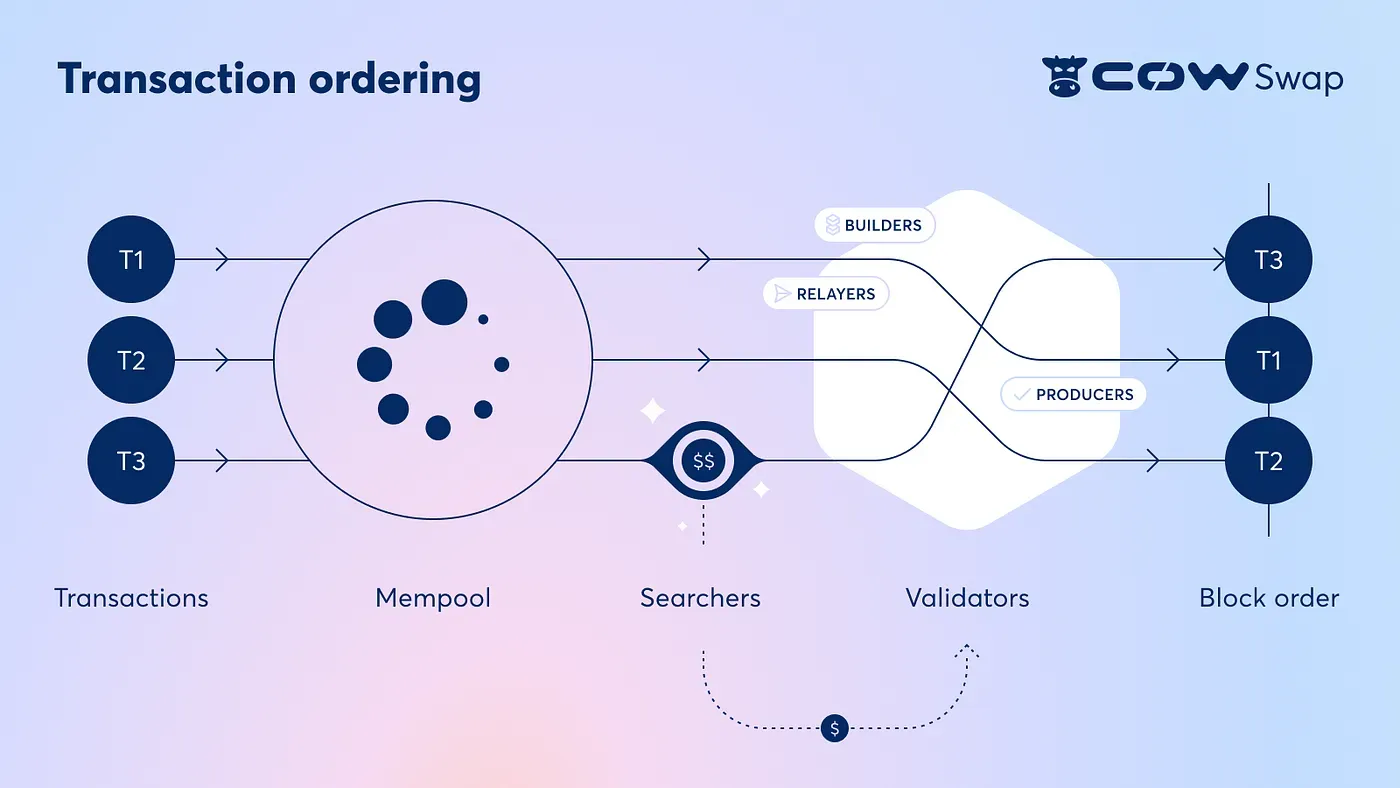
Check if your provider offers guaranteed block inclusion or if transactions still sit in a public mempool. High latency increases the risk of sandwich attacks. Look for providers that explicitly state their block builder relationships and latency metrics.

If you are a DEX or a high-profile wallet, censorship resistance is critical. Ensure your provider has a diverse set of block builders and does not rely on a single entity that could be coerced. Shutter Network and other encrypted mempool solutions offer strong censorship resistance for these use cases.

Most major wallets, like Ledger, now have MEV protection enabled by default. Verify that your wallet is using the latest version and that the protection covers all transaction types, including swaps and NFT minting. EIP-7702-compatible wallets may offer additional features, so check their documentation.
For most users, starting with a wallet that has built-in protection is the easiest first step. As your needs grow, you can move to more specialized solutions like private RPCs or encrypted mempools. Always keep your software updated to benefit from the latest EIP-7702 improvements.
Common questions about MEV bots
MEV (Maximal Extractable Value) is a complex layer of blockchain economics. Understanding its mechanics helps clarify why EIP-7702 and new validator models matter for security and revenue.
No comments yet. Be the first to share your thoughts!